


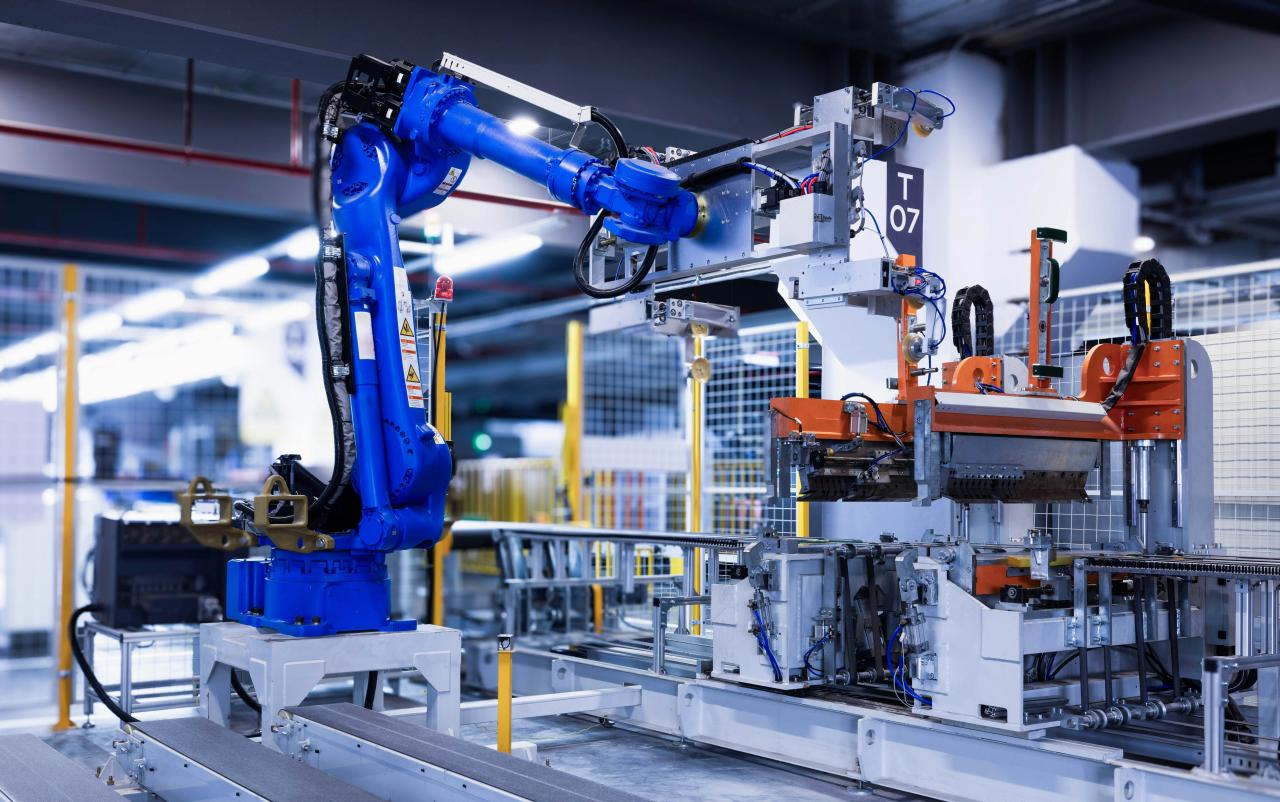
The industrial world is currently witnessing a historic shift as high-tech humanoid robots move from science fiction movies into real manufacturing plants. For many decades, factory automation relied on stationary robotic arms that performed repetitive tasks in caged environments to keep human workers safe.
However, the latest breakthroughs in artificial intelligence and mechanical engineering have birthed a new generation of mobile, bipedal workers that can navigate human spaces with ease. These humanoid robots possess the unique ability to use the same tools and workstations that were originally designed for people.
This flexibility allows factory owners to automate complex assembly lines without rebuilding their entire infrastructure from the ground up. We are moving toward a future where “cobots” and humanoids work side-by-side to solve the global labor shortage in the manufacturing sector.
These robots can walk over uneven floors, climb stairs, and manipulate delicate objects with human-like precision.
As these machines become more affordable and intelligent, they will fundamentally redefine the speed and efficiency of global production cycles. This article explores the mechanics of these new digital laborers and the profound impact they will have on the future of work.
Advanced Locomotion and Balance Control Systems

The most difficult challenge in robotics has always been maintaining balance on two legs while carrying heavy loads in a busy environment. Modern humanoid robots now use advanced gyroscopes and real-time physics engines to stay upright even when pushed or walking on slippery surfaces.
I believe that “dynamic stability” is the key factor that will allow these robots to finally leave the laboratory for the factory floor.
You solve the problem of workplace accidents by using robots that can react instantly to a changing environment just like a person would. This perspective shifts the focus from simple movement to intelligent navigation in complex industrial settings.
A. Bipedal Movement and Obstacle Avoidance
Next-gen humanoids use Lidar and depth cameras to map their path and avoid tripping over loose wires or discarded boxes.
This allows them to move between different workstations without needing expensive floor tracks or magnetic guides. They can step over small obstacles and adjust their stride to maintain a steady speed across the factory.
B. Electric Actuators for Smooth Human-Like Motion
New high-torque electric motors allow robots to move their limbs with a fluid grace that was impossible with old hydraulic systems.
These actuators provide the perfect balance of strength and sensitivity, allowing the robot to lift a heavy engine block or hold a fragile glass vial. The silent operation of electric motors also reduces the noise pollution inside the manufacturing facility.
C. Sophisticated Feedback Loops for Real-Time Balance
Sensors in the robot’s feet send thousands of data points per second to the central processor to adjust for uneven weight distribution.
This ensures the robot does not fall over while leaning forward to reach a deep shelf or carrying a lopsided container. This level of balance is essential for maintaining safety in a facility where humans are constantly moving around.
Enhanced Dexterity with Humanoid Robotic Hands
Automating tasks that require fine motor skills, such as plugging in small wires or sorting tiny screws, has always been the “final frontier” for robotics. Humanoid hands now feature multiple fingers with haptic sensors that allow them to “feel” the objects they are touching.
My new perspective is that “tactile intelligence” is more important than raw strength for the next generation of industrial workers.
You solve the reader’s problem of complex assembly by using robots that can handle the delicate parts of the manufacturing process. This allows for a much higher level of automation in industries like electronics and medical device assembly.
A. Multi-Fingered Grippers with Haptic Feedback
Robotic hands now mimic the human skeletal structure, allowing them to grasp tools like screwdrivers or power drills naturally.
These fingers can detect the amount of pressure being applied, preventing the robot from crushing delicate components during assembly. This sensitivity allows the robot to perform tasks that were previously only possible for skilled human technicians.
B. AI-Powered Object Recognition and Orientation
The robot uses computer vision to identify a tool even if it is lying at a strange angle or buried under other items in a bin.
It can then adjust its grip in real-time to pick up the item correctly and begin the assigned task without any human help. This reduces the time wasted on “pre-sorting” parts, which is a major bottleneck in traditional factory systems.
C. Universal Tool Compatibility for Factory Work
Because these robots have human-like hands, they do not require specialized “end-effectors” for every different job they perform.
They can switch from a welding tool to a cleaning brush just as easily as a human worker would do. This versatility makes the humanoid robot a much better investment for factories that produce many different types of products.
Integrating AI for Autonomous Task Learning
The greatest barrier to using robots has always been the complex and expensive programming required to teach them a single new task. Modern humanoid robots now use “Reinforcement Learning” to teach themselves how to perform new jobs by watching videos or observing humans.
I suggest that the “learn-by-doing” approach is the ultimate shortcut to a fully automated and flexible manufacturing plant.
This perspective solves the problem of high engineering costs by allowing the robots to adapt to new product designs in just a few hours. This makes automation accessible even for small businesses that change their product lines frequently throughout the year.
A. Imitation Learning from Human Demonstrations
A human worker can wear a motion-capture suit to show the robot exactly how to assemble a complex piece of furniture or a car door.
The robot records the movement and then optimizes it using AI to perform the task even faster and more accurately. This “mentor-student” relationship allows for a rapid transfer of skills from experienced humans to the robotic fleet.
B. Digital Twin Simulations for Risk-Free Training
Before a robot ever steps onto the physical factory floor, it can practice its new task millions of times in a virtual “Digital Twin” environment.
This allows the AI to find the most efficient movements and identify potential safety risks without damaging any real equipment. Once the simulation is perfect, the software is uploaded to the physical robot for immediate and flawless execution.
C. Collaborative Problem Solving on the Assembly Line
If a robot encounters an unexpected problem, such as a missing part or a jammed machine, it can use AI to find a creative solution.
It might alert a human supervisor or try an alternative method to keep the production line moving forward. This “operational intelligence” reduces the amount of downtime and prevents minor issues from turning into major factory-wide delays.
Solving the Global Labor Shortage Crisis
Many developed nations are currently facing a critical shortage of workers who are willing to perform difficult, dirty, or dangerous factory jobs. As the older generation of skilled manufacturers retires, there are not enough young people entering the field to take their place.
My perspective is that humanoid robots are not “stealing jobs” but are actually “filling the empty gaps” in our global economy.
You solve the problem of shrinking labor pools by providing a reliable and tireless workforce that can handle the physical strain of factory life. This allows human workers to move into higher-paying roles like robot supervisors, maintenance technicians, or creative designers.
A. Handling High-Risk and Repetitive Physical Tasks
Robots are perfect for jobs that involve heavy lifting, extreme heat, or exposure to loud noises that can harm human health over time.
By taking over these dangerous roles, humanoids significantly reduce the number of workplace injuries and long-term health problems for the staff. This creates a safer and more pleasant work environment for the remaining human employees.
B. Providing 24/7 Production Consistency
A humanoid robot does not suffer from fatigue, boredom, or a lack of focus after working for ten straight hours on a boring task.
They can work through the night and during holidays to ensure that the factory meets its production targets every single month. This consistency allows businesses to predict their output and costs with a level of accuracy that was never possible before.
C. Attracting New Talent to the Tech Sector
The presence of advanced robotics makes the manufacturing industry look much more modern and exciting to the younger, tech-savvy generation.
Young engineers are much more likely to work in a factory that uses cutting-edge AI and humanoid robots than in a traditional, low-tech plant. This helps revitalize the industrial sector and ensures a steady supply of new talent for the future.
Economic Viability and Return on Investment
For many years, the high cost of humanoid robots made them an impossible dream for all but the wealthiest global corporations. However, the price of sensors, processors, and carbon-fiber materials is falling fast, making these machines a realistic option for mid-sized factories.
I believe that “Robotics-as-a-Service” (RaaS) is the business model that will trigger the mass adoption of humanoids across the globe.
This perspective solves the problem of high upfront costs by allowing companies to “rent” robots and pay for them based on the work they perform. This lowers the barrier to entry and allows small businesses to compete with the giants of industry.
A. Lowering the Total Cost of Ownership
As mass production of humanoid parts begins, the cost of a single unit is expected to drop below the price of a luxury car within a few years.
When you factor in the savings on labor, insurance, and energy, the robot often pays for itself in less than twenty-four months of operation. This makes the financial decision to automate very easy for any business owner who looks at the long-term data.
B. Increasing Throughput and Reducing Waste
Robots perform every task with a level of precision that humans cannot match, resulting in fewer defective products and less wasted material.
This higher “first-pass yield” directly increases the profitability of the factory and reduces the environmental impact of the manufacturing process. Precision is profit, and humanoid robots are the ultimate tools for achieving a zero-waste production line.
C. Flexibility to Repurpose Assets Quickly
Unlike a stationary robotic arm that is bolted to the floor, a humanoid robot can be moved to a different part of the factory in minutes.
If the demand for one product drops, you can instantly reassign your robotic fleet to help with a different and more popular item. This flexibility protects your capital investment and ensures that your robots are always working on the most valuable tasks.
Ensuring Safety and Human-Robot Collaboration
The most important rule in any factory is that the workers must be safe, whether they are made of flesh or metal. Next-generation humanoids are designed with “soft-touch” sensors and emergency stop systems that prevent any harmful contact with humans.
My new perspective is that the “safety cage” is officially dead, and the era of “open-floor collaboration” has finally arrived.
You solve the reader’s fear of robotic accidents by using machines that are literally incapable of moving if they detect a human in their immediate danger zone. This creates a harmonious workspace where humans and robots can thrive together without any fear or hesitation.
A. Compliance with International Safety Standards
Modern humanoids follow strict ISO standards that dictate how they must behave when working near human beings in a shared space.
They use “force-limiting” technology to ensure that even if a collision happens, the robot immediately goes limp and causes no injury. These safety protocols are tested millions of times before the robot is allowed to step onto a real factory floor.
B. Intuitive Communication and Signal Systems
Robots use lights, sounds, and even simple screen displays to tell nearby humans what they are planning to do next.
For example, a robot might use a turn signal before moving into a hallway or display a “working” icon on its chest. This clear communication prevents confusion and allows human workers to move around the robot with total confidence and ease.
C. Remote Human Intervention and Oversight
If a robot gets stuck or confused, a human operator can take control remotely using a virtual reality headset from a safe office.
This “human-in-the-loop” system ensures that the robot is never truly on its own and can always get help when it needs it. It combines the raw efficiency of the machine with the superior problem-solving skills of a trained human expert.
Conclusion

Humanoid robots represent the most exciting evolution in the history of industrial manufacturing. You should prepare your business for a future where these machines are your primary partners. Labor shortages will no longer hold back the growth of our global production and economy.
These robots can perform delicate and dangerous tasks with human-like precision and total safety. Innovation in AI allows these machines to learn new skills in just a few hours. The cost of automation is falling fast, making it accessible for small and large factories.
Humans will move into better roles while robots handle the heavy and repetitive lifting. The efficiency of our factories will reach a level we have never seen before. Safety is built into every sensor and algorithm to protect the human workforce.
Sustainable manufacturing is finally possible through the precision and low waste of robotics. We are entering a new age where technology truly serves the needs of humanity. Stay updated on these trends to ensure your career or business stays ahead.
The transition to a robotic workforce is a smart and necessary step for everyone. The factory of the future is silent, clean, and filled with amazing humanoid helpers. Take the first step by exploring how robotics can improve your own local community. The journey to a better world starts with the smart application of these machines.

