


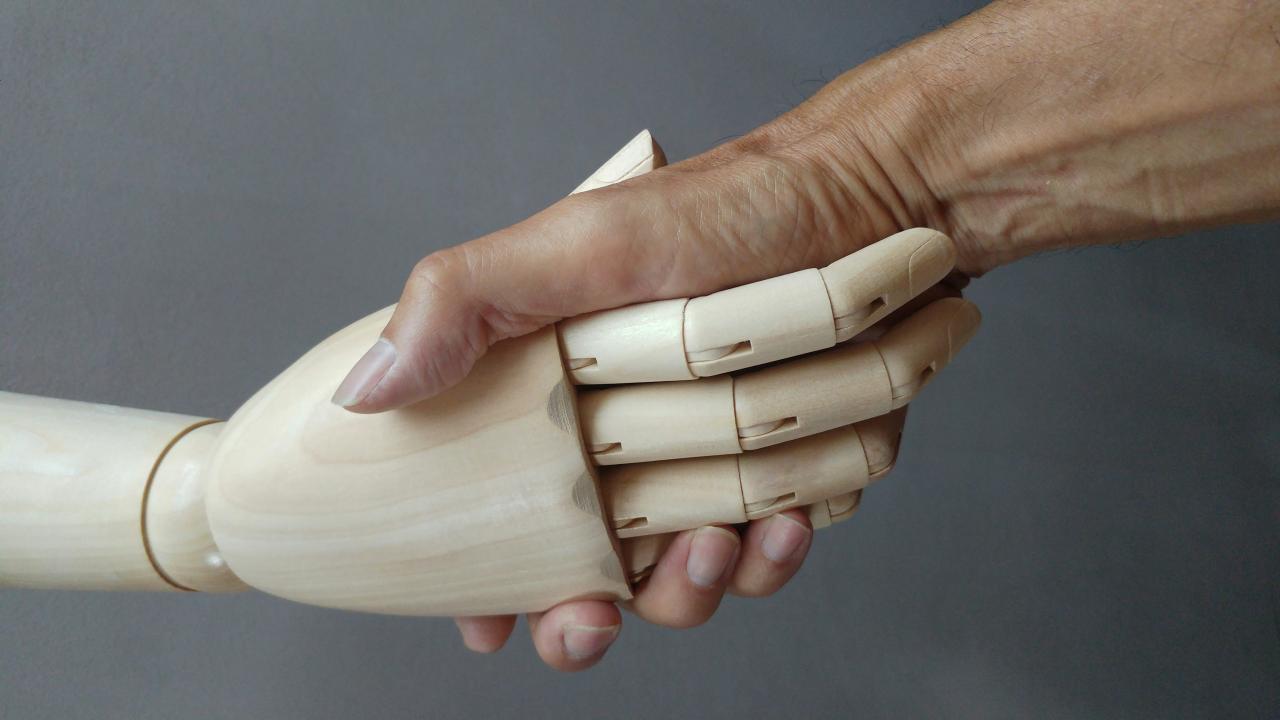
The field of prosthetics is currently undergoing a radical transformation as researchers bridge the gap between human biology and advanced robotics. For decades, individuals with limb loss relied on passive or basic mechanical devices that offered limited movement and zero sensory feedback.
However, the emergence of brain-computer interfaces and osseointegration now allows patients to control robotic limbs using only their thoughts and intentions. This transition represents a monumental shift from simply “wearing” a tool to truly integrating a machine into the human nervous system.
We are entering an era where bionic limbs behave like natural extensions of the body, reacting with the speed and precision of organic muscle. This innovation addresses the critical challenge of phantom limb pain and the psychological disconnect many amputees feel toward their prosthetic devices.
By utilizing sophisticated neural sensors, these new systems can decode complex brain signals and translate them into fluid, multi-axis motions.
This article explores the mechanics of thought-controlled bionics and how they are restoring independence to thousands of people worldwide. We will examine the core technologies behind neural bypasses, the importance of sensory feedback, and the future of human-machine symbiosis.
The Mechanics of Neural Signal Decoding

Thought-controlled bionics rely on the ability to intercept electrical signals sent from the brain to the muscles that no longer exist. Scientists use tiny electrode arrays implanted in the brain or attached to remaining nerves to “listen” to these commands in real-time.
I believe that “neural plasticity” is the real hero of this story, as the brain actually learns to communicate with the hardware over time. You solve the problem of clunky movement by allowing the brain to adapt its signals to the specific capabilities of the robotic limb.
This perspective shifts the focus from the machine’s complexity to the amazing power of the human mind to rewire itself for better control.
A. Implantable Brain-Computer Interfaces (BCI)
High-performance systems use chips placed directly on the motor cortex to record the firing of individual neurons.
These chips transmit data to an external processor that translates “intent” into “action” for the robotic motors. This allows for incredibly fine motor skills, such as typing on a keyboard or playing a musical instrument with a bionic hand.
B. Targeted Muscle Reinnervation (TMR)
TMR is a surgical procedure that reroutes nerves from an amputated limb to nearby healthy muscles, like the chest or upper arm.
When the patient thinks about moving their missing hand, these muscles contract, providing a strong signal for surface sensors to pick up. This technique uses the body’s own natural amplifiers to make the control of a prosthetic limb feel intuitive and natural.
C. Machine Learning and Signal Filtering
The AI inside the bionic limb constantly analyzes the user’s neural patterns to distinguish between intentional movements and random noise.
This ensures that the limb only moves when the person actually wants it to, preventing accidental drops or unintended gestures. The system becomes more accurate every day as it learns the unique “language” of the user’s nervous system.
Osseointegration and Direct Skeletal Attachment
Traditional prosthetic sockets often cause skin irritation, discomfort, and a lack of stability because they sit on top of soft tissue. Osseointegration solves this by surgically inserting a titanium bolt directly into the remaining bone, creating a permanent and rock-solid connection.
My new perspective is that “structural integration” is the key to psychological acceptance of a bionic limb. You solve the reader’s problem of physical discomfort by removing the sweaty, itchy socket and replacing it with a direct bone-to-metal bond.
This perspective allows the user to feel the vibrations of the ground, which helps them walk more naturally and with much more confidence.
A. Titanium Implants and Bone Growth
Surgeons use specialized titanium because the human bone actually grows into and around the metal over a period of several months.
This creates a connection so strong that the prosthetic limb becomes a true structural part of the patient’s skeleton. It allows for a much greater range of motion because there is no bulky socket to block the movement of the joint.
B. Percutaneous Connectors and Neural Wiring
The titanium bolt features a small opening that allows wires to pass from the internal nerves directly to the external robotic limb.
This protected pathway ensures that electrical signals remain clear and free from outside interference or skin resistance. It creates a “closed-loop” system where data flows back and forth between the machine and the brain without any lag.
C. Long-Term Durability and Load Bearing
Direct skeletal attachment allows the user to carry heavier loads and perform more demanding physical tasks without damaging their skin.
It distributes the weight of the prosthetic limb across the bone structure, exactly like a natural limb does for a healthy person. This makes the bionic device feel lighter and more responsive during daily activities like climbing stairs or carrying groceries.
Restoring the Sense of Touch and Proprioception
One of the hardest things about traditional prosthetics is that you cannot “feel” what the hand is touching, which makes delicate tasks very difficult. Modern bionic limbs now include pressure sensors that send electrical pulses back to the brain to simulate the sensation of touch.
I suggest that “sensory feedback” is the final bridge that turns a tool into a part of the self. You solve the problem of broken eggs or crushed cups by giving the brain the data it needs to adjust its grip strength instantly.
This perspective creates a more graceful and human-like interaction with the world, allowing users to pick up a grape or hold a loved one’s hand with total gentleness.
A. Haptic Feedback Loops and Pressure Sensors
The fingertips of a bionic hand contain sensors that measure how hard the person is squeezing an object in real-time.
This information travels back up the nerves to the brain, which perceives the pressure as a physical sensation. It allows the user to operate the limb in the dark or without looking at it, relying solely on the feeling of the touch.
B. Proprioception and Spatial Awareness
Proprioception is the “sixth sense” that tells you where your limbs are in space even when your eyes are closed. Advanced bionics use vibration and electrical stimulation to tell the brain the exact angle and position of the robotic joints.
This prevents the user from feeling “clumsy” and allows them to move through crowded spaces without bumping into objects or other people.
C. Thermal and Texture Sensing
The latest research models include sensors that can detect temperature and even the texture of different surfaces like wood, metal, or fabric.
This level of sensory detail helps the brain fully “adopt” the prosthetic limb as a biological part of the body. It restores a massive part of the human experience that was previously lost to individuals with limb differences.
The Role of Soft Robotics and Artificial Muscles
Traditional robots are made of hard metal and noisy motors, but the next generation of bionics uses soft materials that move like human flesh. These “soft robots” use air pressure or smart fabrics to expand and contract, creating a much smoother and more quiet movement.
My perspective is that “biological mimicry” is the only way to create prosthetics that people actually enjoy wearing in social situations.
You solve the problem of the “uncanny valley” by building limbs that look, feel, and move with the soft grace of a natural arm. This perspective makes bionic users feel more comfortable and less like they are carrying a heavy piece of industrial equipment.
A. Pneumatic and Hydraulic Actuators
Instead of heavy gears, soft bionics use tiny tubes filled with air or fluid to move the fingers and joints of the device.
This makes the limb much lighter and more flexible, allowing it to conform to the shape of whatever it is holding. It also makes the movement much more silent, which is a major request from users who want to blend into their environment.
B. Electroactive Polymers (EAP)
EAPs are “smart plastics” that change shape when they receive an electrical charge, behaving almost exactly like biological muscle fibers.
This technology allows for a high degree of “dexterity,” meaning the hand can perform complex tasks like tying shoelaces or using a needle. It represents the ultimate fusion of chemistry and robotics to replicate the complex mechanics of the human body.
C. Wearable Robotics and Exoskeletons
The same technology used for limb replacement is now being used to create wearable “exo-suits” that help people with paralysis walk again.
These suits support the body’s weight and use thought-control to move the legs in a natural walking pattern for the user. It offers a new level of mobility and health benefits for people who have spent years in a wheelchair.
Advancements in Battery Life and Power Management
A bionic limb is only useful if it has enough power to last through a full day of work, hobbies, and social activities. New battery technologies and energy-harvesting systems are ensuring that users never have to worry about their limb “dying” in the middle of a task.
I believe that “energy autonomy” is a basic right for bionic users to ensure they are never stranded without their mobility. You solve the anxiety of a low battery by using systems that can charge wirelessly or even capture energy from the user’s own movements.
This perspective makes the technology more reliable and less of a burden on the user’s daily schedule and peace of mind.
A. High-Density Solid-State Batteries
Solid-state batteries hold more energy and are much safer than the standard lithium-ion batteries found in phones today.
They allow a bionic limb to run for up to forty-eight hours on a single charge while remaining light enough to be comfortable for the user. This means you can go on a weekend trip without worrying about finding a power outlet every few hours.
B. Kinetic Energy Harvesting
Some experimental limbs can actually generate small amounts of electricity from the vibrations and movements of the user’s body as they walk.
While not enough to power the whole limb yet, it can extend the battery life by twenty percent or more during a busy day. This “self-charging” capability is the first step toward a prosthetic that never needs to be plugged into a wall.
C. Wireless Charging and Smart Hubs
Users can now charge their limbs through their clothing using resonant inductive coupling, just like a wireless phone charger. You can simply sit in a chair with a built-in charger to top up your battery while you watch a movie or eat dinner.
This makes the management of the device feel less like a chore and more like a seamless part of a modern, tech-connected lifestyle.
Enhancing Social Inclusion and Psychological Health
The impact of thought-controlled bionics goes far beyond physical movement; it profoundly changes how a person feels about themselves and their place in society. When a person can move their hand just by thinking about it, they feel a sense of “agency” and “wholeness” that was previously missing.
My new perspective is that “technological empowerment” is the best form of therapy for individuals recovering from traumatic limb loss.
You solve the problem of social anxiety by providing a device that is a conversation starter and a symbol of human resilience rather than a tragedy. This perspective allows users to celebrate their unique identity as pioneers in the new age of human-machine integration.
A. Personalized Aesthetic Covers and Skins
Bionic users can now choose from a variety of covers, ranging from realistic silicone to high-tech carbon fiber or even glowing LED designs.
This allows the user to express their personality and style through their prosthetic, turning it into a piece of wearable art. When you look good, you feel good, and that confidence radiates into every area of your personal and professional life.
B. Reducing Phantom Limb Pain Through Neural Feedback
Phantom limb pain happens when the brain sends signals to a missing limb and gets no response back, causing a “short circuit” of pain.
Thought-controlled bionics provide the visual and neural feedback the brain is looking for, which often makes the pain disappear completely. This is a massive medical benefit that traditional prosthetics simply cannot provide for the majority of patients.
C. Building a Supportive Community of Bionic Pioneers
As more people receive these advanced limbs, a global community of “cyborgs” is forming to share tips, tricks, and emotional support.
This social network helps new users navigate the technical and emotional challenges of living with a high-tech prosthetic device. You are not just buying a machine; you are joining a movement of people who are redefining what it means to be human in the digital age.
Conclusion

Thought-controlled bionic limbs are the ultimate fusion of human intent and robotic precision today. You must realize that these devices are changing lives and restoring hope every single day. Controlled by the mind, these limbs move with a grace that was previously considered impossible.
Sensory feedback allows users to feel the world again through their high-tech and smart fingers. Direct bone attachment provides a level of stability and comfort that old sockets lacked. You solve the problem of physical limits by embracing the power of modern neural science.
Soft robotics make the experience of wearing a prosthetic much more natural and very quiet. Battery technology ensures that your bionic partner is always ready for a new and busy day. The psychological benefits of these devices are just as important as the physical and mobile ones.
Privacy and data security remain the foundation of the relationship between the brain and the machine. Innovation in this field is a major victory for the spirit of human and creative resilience. Every new sensor is a step toward a world where disability is a thing of the past.
Support for this technology is a vote for a more inclusive and advanced global society. Stay curious about these trends to see how the human body is evolving with technology.
The journey to a truly bionic future starts with a single thought and a neural chip. Take the first step by learning more about the clinics that offer these life-changing devices.

