


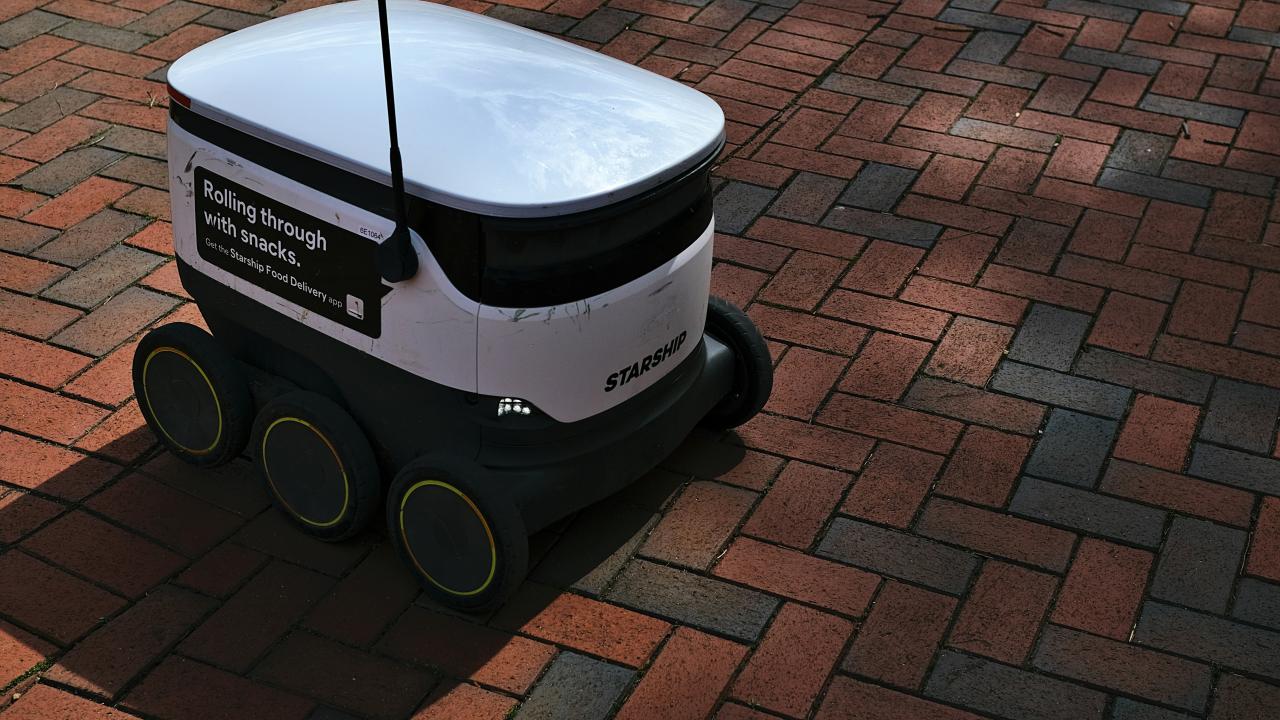
The landscape of urban logistics is undergoing a radical transformation as autonomous delivery robots begin to dominate our city sidewalks and streets. For decades, the “last-mile” delivery problem has remained the most expensive and inefficient part of the entire supply chain process.
Traditional methods rely on large vans that contribute to traffic congestion, double-parking issues, and significant carbon emissions in residential neighborhoods. However, the emergence of self-driving robotic couriers offers a high-tech solution that promises to make receiving a package as seamless as sending a text message.
These compact, sensor-rich machines navigate complex pedestrian environments with incredible precision, avoiding obstacles and respecting traffic signals. We are moving toward a world where your morning coffee or local grocery order arrives via a silent, electric-powered robot instead of a noisy truck.
This shift is not just about convenience; it is about building a more sustainable and less congested urban infrastructure for future generations. As major tech firms and local startups scale their fleets, the sight of a six-wheeled robot crossing the street is becoming a common part of daily life.
This article explores the technology driving these machines, the economic impact on local businesses, and how they solve the modern challenges of city living.
The Cutting-Edge Sensor Suite Driving Autonomy

To navigate a busy sidewalk safely, a delivery robot must possess a level of spatial awareness that rivals human intuition. These machines use a sophisticated blend of cameras, Lidar, and ultrasonic sensors to create a real-time three-dimensional map of their surroundings.
I believe that the real magic lies in the artificial intelligence that predicts human behavior before it happens. You solve the safety concern by using a “defense-first” algorithm that always prioritizes pedestrians and pets over delivery speed.
This perspective ensures that robots integrate into the social fabric of the street rather than becoming a nuisance to the people living there.
A. Lidar and 360-Degree Vision Systems
Lidar sensors pulse thousands of laser beams per second to measure the exact distance to every object in the robot’s path.
This allows the machine to detect a thin lamppost or a small dog even in low-light conditions or heavy rain. High-resolution cameras complement this data by identifying colors and reading street signs or traffic lights to ensure full compliance with local laws.
B. Ultrasonic Sensors for Close-Range Precision
When a robot is moving through a tight crowd or navigating near a glass storefront, it uses ultrasonic sensors to detect immediate proximity.
These sensors act like a digital “touch,” preventing any physical contact with people or property. This layer of hardware redundancy is what allows these machines to operate in high-traffic areas without a human handler.
C. On-Board Edge Computing for Real-Time Logic
Instead of waiting for a signal from the cloud, these robots process their most critical decisions locally on high-performance internal chips.
This reduces “latency,” which is the delay in response time that could lead to an accident. The robot can stop instantly if a child runs into the path, ensuring a level of safety that manual drivers sometimes struggle to maintain.
Solving the Last-Mile Delivery Cost Crisis
The final leg of a package’s journey is often the most frustrating for both the company and the customer. Statistics show that the last mile accounts for over fifty percent of total shipping costs due to labor and fuel inefficiency.
My new perspective is that autonomous robots are the only way to make “on-demand” delivery truly affordable for the average person.
You solve the high-cost problem by replacing a heavy, expensive truck with a small, energy-efficient robot that costs pennies to operate. This makes it possible for even the smallest local bakery to offer home delivery without losing all their profit.
A. Drastic Reduction in Labor and Fuel Expenses
A robot does not need a salary, health insurance, or a lunch break, allowing it to work during off-peak hours or late at night.
This efficiency allows companies to offer “free shipping” or very low-cost delivery windows to their customers. Since these robots are fully electric, they also shield businesses from the volatile and rising prices of gasoline or diesel.
B. Higher Density Delivery Routes in Cities
One delivery van might get stuck in traffic for twenty minutes to move just two blocks in a busy downtown area. A fleet of ten small robots can fan out from a central hub to cover the same area in a fraction of the time. This “swarm” approach to logistics ensures that every customer receives their order while it is still fresh and hot.
C. Optimizing Curb Space and Traffic Flow
Traditional delivery trucks often block lanes or park illegally, causing frustration for other drivers and slowing down the city.
Robots use sidewalks and bike lanes, keeping the main roads clear for public transit and emergency vehicles. This better use of city space improves the overall quality of life for everyone who lives and works in the urban core.
Enhancing Security and Package Protection
Porch piracy and package theft are growing problems that cost consumers and insurance companies billions of dollars every year. When a truck leaves a box on your doorstep, it is vulnerable to anyone walking by before you get home.
I suggest that the “secure cargo hold” of a delivery robot is the best anti-theft device ever invented for e-commerce.
You solve the theft problem by ensuring that the package stays locked inside a metal shell until you are standing right in front of it. This provides a level of security and peace of mind that traditional courier services simply cannot provide.
A. App-Locked Cargo Compartments
The robot’s lid only opens when the customer provides a unique code or uses their smartphone’s biometrics near the machine.
This ensures that your expensive electronics or private medical supplies only go to the person who actually ordered them. It removes the stress of having to track your package every minute to make sure it hasn’t been stolen.
B. Tamper Alerts and Real-Time Video Monitoring
Every robot is equipped with GPS tracking and multiple cameras that record everything happening around the machine.
If someone tries to lift or break into the robot, it triggers a loud alarm and sends a live video feed to a security center. This high level of surveillance acts as a powerful deterrent to would-be thieves in residential neighborhoods.
C. Controlled Internal Environment for Perishables
Many delivery robots now feature insulated or even refrigerated compartments to keep food at the perfect temperature.
This means your ice cream won’t melt and your pizza stays piping hot during the journey across town. The secure and climate-controlled environment protects the quality of the product better than a bag sitting on a passenger seat.
Environmental Impact and Sustainability Goals
City governments are under constant pressure to reduce carbon emissions and meet strict new environmental targets. A single delivery truck can emit massive amounts of CO2 and particulate matter into the air during a typical eight-hour shift.
My perspective is that switching to a robotic fleet is the fastest way for a city to “green” its local commerce. You solve the pollution problem by moving light packages with light, electric-powered machines instead of two-ton combustion vehicles. This transition is a vital step toward creating breathable, healthy cities for our children to grow up in.
A. Zero-Emission Electric Drivetrains
Delivery robots run on rechargeable batteries, meaning they produce zero tailpipe emissions while navigating your neighborhood.
When these robots are charged using renewable energy like solar or wind, the entire delivery process becomes carbon-neutral. This helps businesses align with the growing consumer demand for eco-friendly and sustainable shopping options.
B. Reduced Wear and Tear on City Roads
Heavy trucks cause significant damage to asphalt and concrete, leading to expensive repairs paid for by taxpayers.
A sixty-pound robot has almost zero impact on the road surface, extending the life of our streets and sidewalks. This hidden saving allows city budgets to be spent on more important projects like schools, parks, or public health.
C. Lowering Urban Noise Pollution
Traditional delivery vans are noisy, especially when they are idling or backing up with loud warning beeps. Robots move silently on rubber wheels, making them ideal for deliveries in quiet residential areas or near hospitals and schools. This reduction in noise pollution creates a more peaceful and relaxing urban environment for everyone.
Impact on Local Businesses and Retailers
Many small shop owners struggle to compete with giant online retailers who have their own massive delivery networks. Autonomous robots level the playing field by providing small businesses with access to high-tech, low-cost logistics.
I believe that these robots will actually save the “Mom and Pop” stores by making local shopping more convenient than ever before.
You solve the business owner’s dilemma of choosing between expensive delivery apps and no delivery at all. This technology keeps money within the local community by making it easy to support your neighborhood merchants.
A. Lower Commissions for Local Delivery
Third-party delivery apps often take thirty percent of a restaurant’s revenue just to provide a driver. Owning or leasing a delivery robot allows the business to keep much more of their hard-earned money. This increased profit margin can be the difference between a small business surviving or closing its doors forever.
B. Real-Time Inventory and Fast Fulfillment
A robot parked right outside the store can be loaded and sent out the moment an order is placed online. This “instant gratification” allows local stores to beat the delivery times of even the largest national warehouses.
Customers love knowing that their purchase is supporting a local neighbor while getting the speed of a global giant.
C. Direct Connection with the Customer Base
Businesses can brand their robots with local logos or even give them “personalities” that reflect the neighborhood’s character.
This creates a fun and engaging shopping experience that builds brand loyalty and community spirit. The robot becomes a traveling billboard for the shop, attracting new customers as it moves through the streets.
Navigating the Regulatory and Social Landscape
As with any new technology, the rise of delivery robots brings up important questions about privacy, jobs, and sidewalk right-of-way. City councils are currently working to create rules that balance the benefits of innovation with the needs of the public.
My new perspective is that “collaboration” between tech companies and city planners is the only way to avoid a public backlash.
You solve the social friction by involving the community in the testing phase and being transparent about how the robots work. A robot that is seen as a “helper” will be much more successful than one that is seen as an “invader.”
A. Clear Guidelines for Sidewalk Speed and Weight
Most cities limit delivery robots to a walking speed of about four miles per hour to ensure pedestrian safety. They also have weight limits to prevent any damage to infrastructure or injury to people during a collision.
These common-sense rules help the public feel safe and comfortable sharing the sidewalk with autonomous machines.
B. Privacy Protections and Data Handling
Tech companies must be clear about what their cameras are recording and how long they keep that data stored. Many robots use “blurring” technology to automatically hide faces and license plates in their video feeds.
Protecting the privacy of the people on the street is essential for maintaining public trust and avoiding legal challenges.
C. Job Transition and New Opportunities
While robots may replace some traditional driving jobs, they also create new roles in maintenance, fleet management, and remote monitoring.
Companies are investing in training programs to help workers transition into these high-tech support positions. This ensures that the robotic revolution benefits the workforce rather than leaving people behind in the old economy.
The Future of Multi-Modal Robotic Delivery
In the coming years, we will see robots that don’t just roll on sidewalks but can also climb stairs and enter buildings. The next generation of delivery tech will feature “humanoid” or “quadruped” designs that can navigate the most difficult urban environments.
I suggest that “accessibility” is the next big frontier for the autonomous delivery market. You solve the problem of reaching a fifth-floor apartment by using robots that can use elevators and knock on doors. This ensures that everyone, including the elderly and the disabled, can benefit from the convenience of robotic delivery.
A. Robots with Legged Locomotion for Stairs
Wheels are great for flat surfaces, but legs are necessary for the “porch-to-door” segment of the journey. New robotic designs inspired by animals can walk over curbs, climb steps, and even navigate through narrow hallways. This allows for true “door-to-door” service without any human intervention required at the destination.
B. Integration with Autonomous Vans and Hubs
A large “mother-ship” van can carry a dozen small robots into a neighborhood and release them for local deliveries.
This hybrid approach combines the long-distance efficiency of a van with the last-mile precision of a robot. It allows for the rapid delivery of hundreds of packages in a single neighborhood within a very short amount of time.
C. Voice Interaction and Customer Service AI
Future robots will be able to talk to customers, answer questions about the delivery, and even handle returns on the spot.
This “social intelligence” makes the interaction feel more natural and helpful for the user. It turns a simple machine into a friendly service assistant that represents the company’s commitment to quality.
Conclusion

Autonomous delivery robots are changing how we think about urban logistics and convenience. You must accept that the streets of the future will be shared with smart machines. These robots solve the most expensive and difficult part of the modern delivery process.
Safety is the primary focus of every sensor and algorithm inside these robotic couriers. Labor costs and fuel prices will no longer dictate the price of your local delivery. Your packages are safer and more secure inside a locked robotic compartment than on a porch.
The environmental benefits of electric robots are essential for our city’s long-term health. Small businesses can finally compete with giant corporations by using low-cost robotic fleets. City regulations will continue to evolve to protect the privacy and safety of all citizens.
New jobs are being created to support and maintain these complex autonomous systems. Future robots will climb stairs and enter buildings to provide true door-to-door service. Innovation in AI and sensors is making these machines smarter and more capable every day.
The transition to robotic delivery is a major step toward a quieter and cleaner world. Support your local merchants who use this technology to bring you fresh and fast goods. Stay curious and open to the ways technology can improve your daily urban life. The robotic revolution is happening right now on a sidewalk near your own home.

